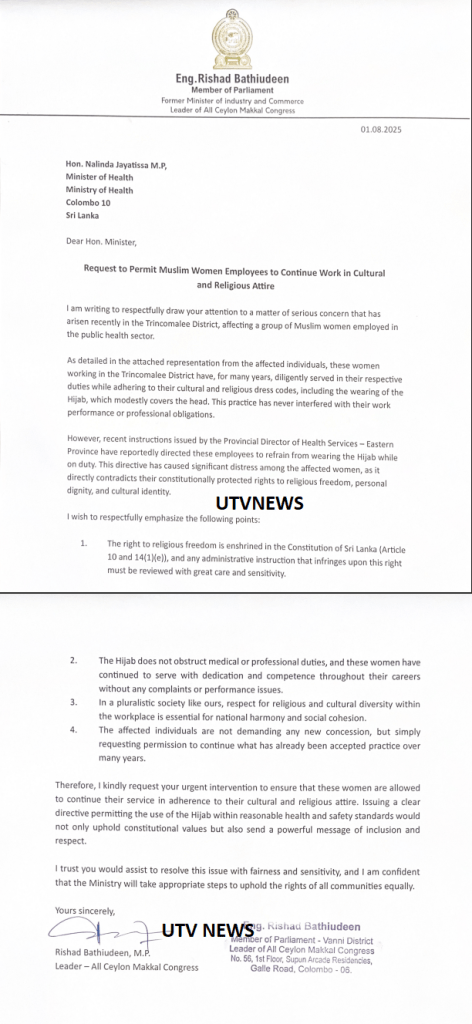
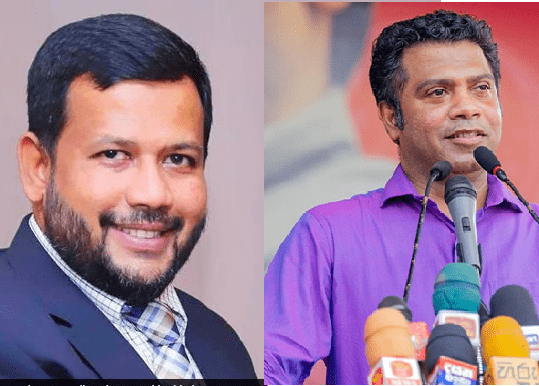
(UTV NEWS- Colombo) Rishad Bathiudeen, Member of Parliament and Leader of the All Ceylon Makkal Congress (ACMC), has formally appealed to the Minister of Health, Hon. Dr. Nalinda Jayatissa, urging immediate intervention to protect the constitutional rights of Muslim women employed in the public health sector in the Trincomalee District.
In a letter addressed to the Health Minister, MP Bathiudeen highlighted growing concerns surrounding recent directives reportedly issued by the Provincial Director of Health Services – Eastern Province, instructing Muslim women health employees to refrain from wearing the Hijab—a traditional religious head covering—while on duty.
“This directive has caused significant distress among the affected women,” MP Bathiudeen wrote. “It directly contradicts their constitutionally protected rights to religious freedom, personal dignity, and cultural identity.”
For years, Muslim women in Trincomalee’s public health services have been performing their duties diligently while wearing the Hijab, with no impact on their professional responsibilities or work performance. The sudden change in policy has sparked outcry from civil rights advocates and community members alike.
MP Bathiudeen emphasized several key points in his appeal:
- Religious freedom is guaranteed under Article 10 and Article 14(1)(e) of the Constitution of Sri Lanka.
- The Hijab does not interfere with the execution of medical or administrative duties.
- Cultural and religious diversity must be respected in the workplace, especially within a pluralistic society.
- The request is not for a new privilege, but for the continuation of an accepted and long-standing practice
- Calling for swift action, the MP urged the Minister to issue a clear directive allowing Muslim women to wear religious attire in the workplace, within reasonable health and safety parameters.
“Your intervention would not only uphold constitutional values but also send a powerful message of inclusion and respect,” he added. The letter has been welcomed by human rights groups and Muslim community organizations, who argue that such restrictions could set a dangerous precedent if left unaddressed.